ServicesSolar System Add-Ons
Solar System Add-Ons in Midvale
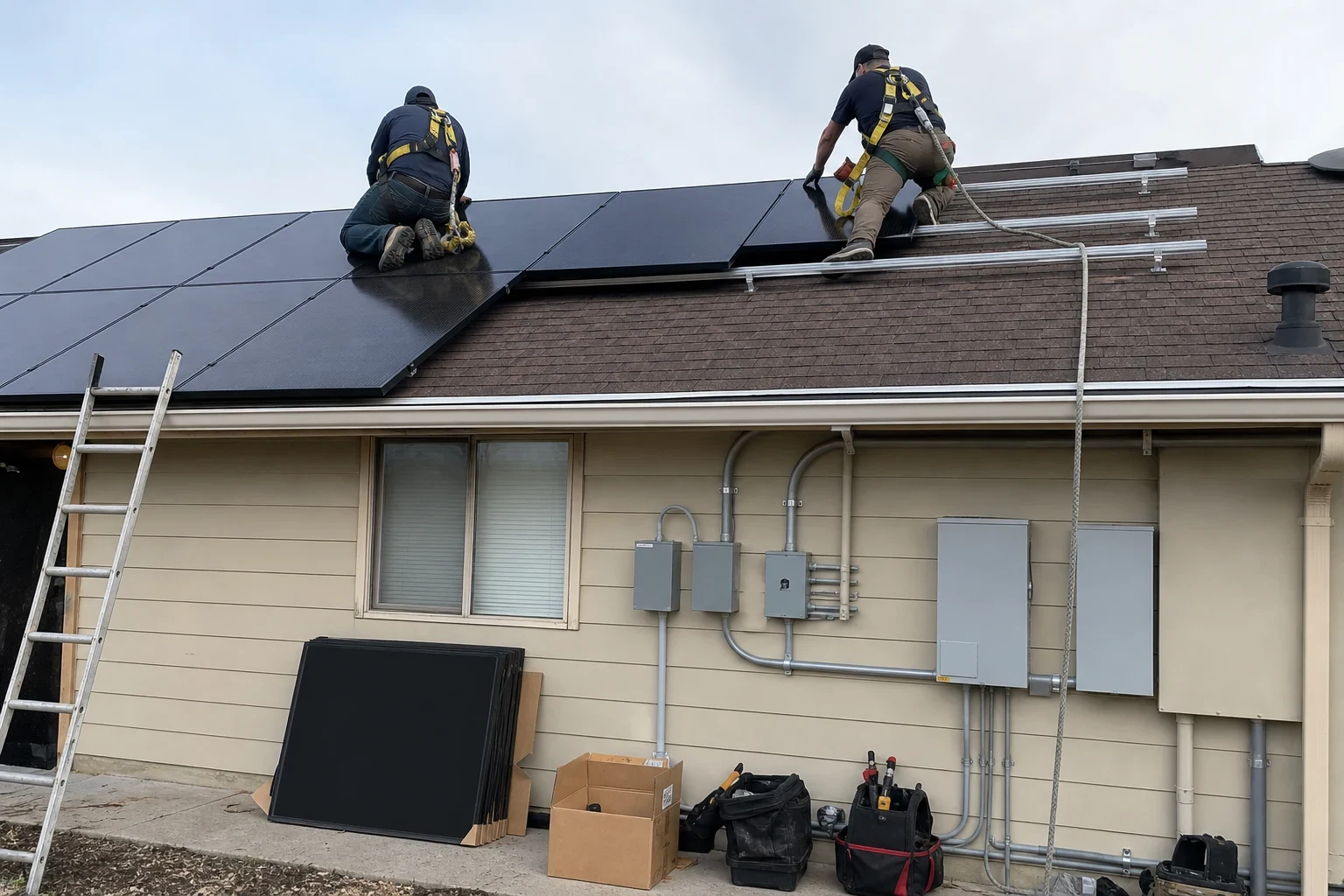
Add an EV charger circuit, a bigger electrical panel, production monitoring or more panels to the solar system on your home. We check the wiring and service equipment an older house already has, then size each add-on to work with your inverter and pass inspection.
What an add-on does and when it makes sense
An add-on changes what your solar system can do after the panels are already producing. It might let you charge a car, see usage circuit by circuit, carry more load or cover a bigger bill. Most requests follow a change at home: a new electric vehicle, a heat pump, a hot tub or a family member moving in.
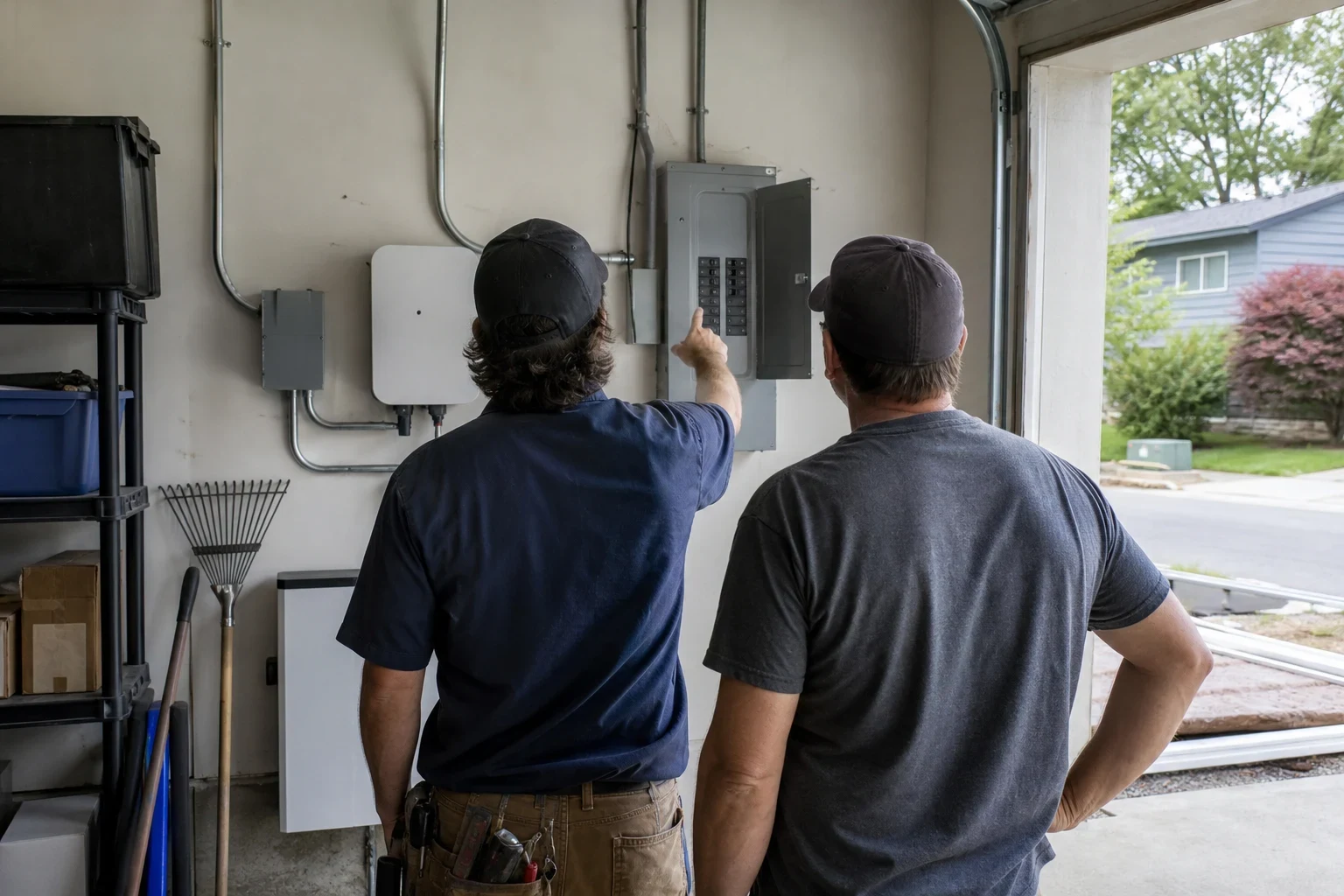
Older houses make this trickier than it looks. A 100-amp main panel, a split-bus panel from the 1960s, or a circuit a past owner extended with undersized wire can limit what the system can safely carry. Under the National Electrical Code's 120 percent rule, the busbar rating caps how much solar backfeed a panel can accept. That means the panel often decides what you can add before the roofline or the budget does.
So we look at the whole path, from the meter base to the last breaker, before recommending anything. Sometimes the right answer is a single new circuit. Sometimes it is a service upgrade first.
Add-ons we install
- Main panel and service upgrades
- We replace 100-amp or obsolete panels, including Federal Pacific Stab-Lok and Zinsco, with a 200-amp panel that has room for solar breakers and new circuits. We coordinate the utility disconnect and the electrical inspection.
- Level 2 EV charger circuits
- A dedicated 240-volt circuit sized at 125 percent of the charger's continuous load, as code requires. We run it in conduit to the garage or driveway and set the breaker where it will not crowd your solar backfeed.
- Production and consumption monitoring
- Current transformers on the main feeders let your app show what the house uses, not only what the panels make. That makes it easy to catch a failing well pump, a stuck freezer or an always-on load you did not know about.
- Array expansion
- We add modules to an existing system after matching their electrical specs to your inverter or microinverters. We also check string voltage against cold winter mornings, since low temperatures push panel voltage up and can exceed inverter limits.
- Smart load management
- A load controller can pause the EV charger while the dryer or range runs. On some homes that lets a 100-amp service handle new equipment without a full panel replacement.
- Whole-home surge protection
- A surge protective device at the main panel helps shield the inverter and the electronics on every circuit from utility and lightning surges.
Signs your system is ready for an add-on
No open breaker slots
If your panel is full of tandem breakers or has no space left, there is nowhere to land a charger or new circuit safely.
A new EV on a wall outlet
Charging on 120 volts adds only a few miles per hour. A Level 2 circuit fills the battery overnight.
Your bill crept back up
A heat pump, electric water heater or hot tub can outgrow the array you sized years ago. Added panels or better load tracking show where the gap is.
Monitoring shows one number
If your app reports only total inverter output, you cannot tell whether the system or the house is behind a high bill.
Warm, buzzing or known-problem breakers
Heat at the panel, a buzz or a brand with a history of breakers that fail to trip points to equipment that should be replaced before anything new is added.
Lights dim when the AC starts
Repeated dimming can mean an undersized service or loose connections, both worth checking before more load goes on.
From first call to final inspection
- 1
Start with a phone conversation
We ask what system you have now, roughly when the house was built and what you would like to add. A look at your recent utility bills keeps the recommendation tied to how you actually use power.
- 2
On-site review and load math
We photograph the meter base, main panel, grounding electrode and inverter, then work through an NEC load calculation. You hear plainly which add-ons fit today and which need an upgrade ahead of them.
- 3
Drawings and paperwork
We prepare the one-line electrical diagram, file for the permit and handle the utility forms whenever backfeed or service size changes.
- 4
The work itself
Your power goes off only during the window we agree on in advance. Walkways get covered, every new breaker gets a label, and offcuts, boxes and debris leave with our crew.
- 5
Sign-off and app setup
We are on site when the inspector arrives. Afterward we load the monitoring app onto your phone and explain what each reading tells you.
Cost drivers for adding to your system
The new equipment is often the smaller part of the bill. What is already behind your walls decides most of the scope, so two houses asking for the identical EV charger can end up with very different jobs. After the site visit you get a written estimate broken out line by line, and $0 up front is available.
- Condition of your existing service
- A modern 200-amp panel with open slots may only need one new breaker. A full or obsolete panel, or service entrance conductors too small for the added load, turns the job into an upgrade first.
- Wire run distance and route
- Mounting a charger next to the panel keeps the run short. A detached garage or a driveway on the opposite side of the house can mean trenching or a long stretch of conduit.
- Compatibility with your inverter
- New modules have to fall within your inverter's input limits. When the inverter is discontinued or already near capacity, the design may call for a second inverter or microinverters.
- Utility and permit scope
- A service upgrade involves a utility disconnect, a reconnect and an inspection. That coordination takes calendar time a monitoring install never needs.
Add-on questions from homeowners
Something not covered here? (801) 761-4045
A different installer put in my system. Can you still add to it?
In most cases, yes. Send us the inverter model, the module specs and the original permit if you kept it. If the inverter is out of production or has no headroom left, we say so at the start and walk you through the choices.
Will an EV charger force me into a panel upgrade?
Not necessarily. The load calculation shows whether your existing service can carry the charger. When the numbers are tight, a load management device or a lower amperage setting on the charger can often avoid replacing the panel.
Is a permit required for an add-on?
Most cities in the Salt Lake Valley require an electrical permit for new circuits, panel replacements and array expansions. We file for it and book the inspection ourselves, so the paperwork stays off your plate.
What if my house has an old panel or aluminum branch wiring?
We can still work with it. During the visit we note the panel brand and wire type, photograph anything that worries us and explain what must change before new load goes on. Aluminum circuits can often remain in place when they are terminated with connectors rated for aluminum.
Does adding monitoring affect how much my panels produce?
No. Monitoring reads the current, it does not alter output. What it gives you is an early signal when production falls or household usage climbs, so problems get caught sooner.
Is it worth adding battery storage during the same project?
If the panel is being replaced anyway, planning for a battery now means the new panel gets the right spaces and ratings. Our Battery Storage page covers the details, and we can quote both pieces of work together.
Find out what your system can handle
Tell us what you want to add and how old your house is. We will look at your bills and your electrical setup, then explain what fits and what it takes.