ServicesBattery Storage
Battery Storage in Midvale
Solar panels produce the most around noon, often more than your home is using. A battery banks that surplus for the evening hours and keeps essential circuits running when the grid fails. Before designing anything, we check your electrical panel, wiring and loads so the system matches the house you actually have.
How Home Storage Works and Where It Earns Its Keep
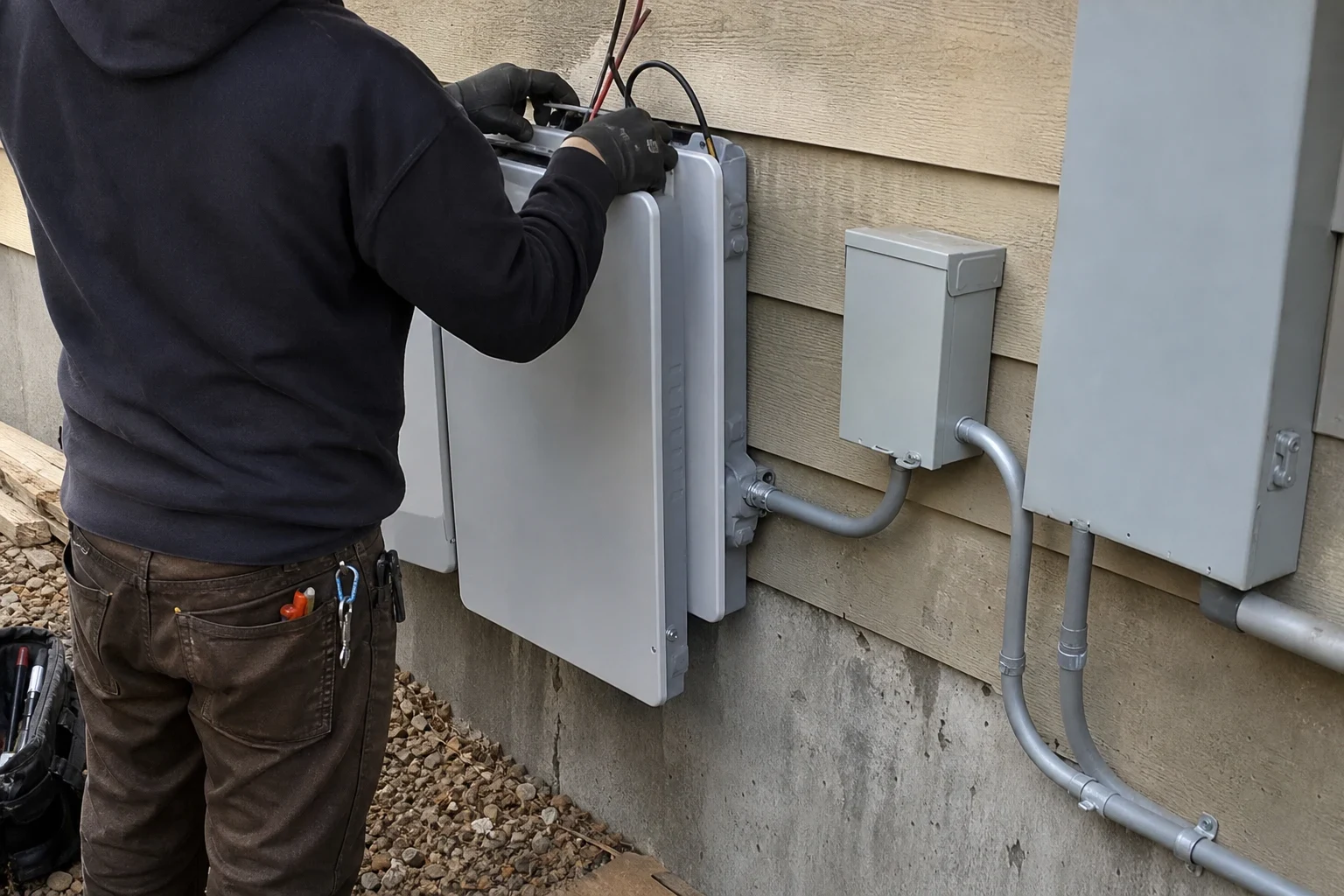
The cabinet you see on the wall is only one part of the setup. Behind it sit a lithium iron phosphate battery bank, an inverter or charge controller, and in most installs a backup gateway. The gateway acts as an automatic transfer switch. The moment utility power fails, it isolates your home from the street lines, so stored energy cannot back-feed onto wires a line crew may be working on. Most installs also include a critical loads panel, a small subpanel holding the circuits you want powered during an outage, such as the refrigerator, furnace blower, some lights and outlets, and the garage door opener.
Storage pays its way when the credit you get for exported solar is lower than what you pay for grid power after dark. Rather than sending midday surplus out at that lower rate, the battery keeps it and supplies your home through the evening.
Older houses call for a closer look before anything gets wired in. A 100-amp service, a full panel, or breakers from a brand that is no longer manufactured can change the design. We catch those during the assessment, not on install day.
What Our Battery Storage Work Includes
Load and usage review
We read your utility bills and walk through which appliances you rely on. That tells us how many kilowatt-hours of storage you need and how much continuous output the inverter has to deliver.
Electrical panel inspection
We open the panel and check its rating, breaker brand, bus bar condition and grounding. Panels in older houses sometimes carry past repairs, double-tapped breakers or aluminum branch wiring that have to be addressed before a battery connects.
Critical loads subpanel
For partial backup, we move selected circuits to a dedicated subpanel fed by the battery. Every breaker gets a label, so you know which circuits stay on in an outage.
Mounting and conduit
Most units hang inside the garage or on an outside wall that stays out of direct afternoon sun, spaced to the clearances the manufacturer and local code call for. We route the conduit along the shortest protected path back to the panel and keep the run tidy.
Permits and utility approval
Our crew handles the electrical permit and is on site when the inspector comes out. We also complete the utility's interconnection forms, which the system needs before it can legally operate.
App setup and walkthrough
Before we leave, we set up the monitoring app and show you how to choose backup reserve levels and time-of-use settings.
Signs Battery Storage Fits Your Home
Outages keep interrupting your day
Summer storms and winter wind can knock out power. A battery with a backup gateway keeps your furnace blower and refrigerator running without a gas generator.
Your solar exports more than you use
If your panels produce heavily at noon while nobody is home, much of that power leaves at a low credit. Storing it for evening use gets more value from the system you already own.
You have solar but no backup
Standard grid-tied inverters shut off during an outage for safety, so panels alone do not keep the lights on. Adding a battery and gateway changes that.
Someone at home depends on powered equipment
Oxygen concentrators, sump pumps and refrigerated medication need steady power. A critical loads panel puts those circuits first.
An EV or heat pump is on the way
New large loads change your evening demand. Planning storage alongside them avoids sizing the battery twice.
How a Battery Installation Runs
- 1
Phone call or virtual appointment
We talk through your bills, outage history and goals. Many questions can be settled in a free virtual appointment before anyone visits.
- 2
On-site assessment
We inspect the main panel, meter base, grounding and the wall where the battery would hang. If the panel needs an upgrade or a past repair needs correcting, you hear it here, in writing, with the reason.
- 3
Design and permit
We size the battery and inverter to your loads and draw the single-line diagram. Then we apply for the electrical permit and utility approval on your behalf, and call you when both come through.
- 4
Installation day
Most battery installs take one day. Power is off for a few hours while we land the gateway and subpanel, and we tell you when so you can plan around it. We clean up conduit offcuts and packaging before we leave.
- 5
Inspection and activation
After the city inspection and utility sign-off, we turn the system on, test a simulated outage and walk you through the app.
What Moves the Price of a Home Battery
Battery pricing depends mostly on how much backup you want and what your electrical system needs to support it safely. We give you a line-item quote so you can see each piece. Financing with $0 up front is available.
- Storage capacity
- More kilowatt-hours means more battery modules. Covering a few circuits overnight takes far less storage than running central air.
- Partial or whole-home backup
- Whole-home backup needs a larger inverter and often a bigger gateway. A critical loads panel keeps the system smaller.
- Panel condition and service size
- An older 100-amp panel, obsolete breakers or corroded bus bars may need replacing or upgrading before the battery can connect.
- Mounting location
- A battery beside the main panel in the garage is a short, simple run. A distant wall or a detached garage adds conduit, wire and labor.
Battery Storage Questions
Something not covered here? (801) 761-4045
Will a battery work in a cold Utah garage?
Yes, within the manufacturer's rated range. Lithium iron phosphate batteries charge more slowly in freezing temperatures, and many units include built-in heaters for that reason. We pick a mounting spot that stays within the rated range and avoids direct afternoon sun.
Can you add a battery to my existing solar system?
In most cases, yes. We check your current inverter to see whether the battery can couple on the AC side or needs a compatible hybrid inverter. That answer comes from the assessment, not a guess over the phone.
Will the battery run my whole house during an outage?
It can if it is sized for that, but most homeowners back up essential circuits only. Central air, electric ranges and dryers draw heavily and drain storage quickly. We show you how long your chosen circuits would run on the capacity you are considering.
My house has an old electrical panel. Is that a problem?
It may be. Some older panels use breakers that are no longer manufactured or have limited capacity for new connections. We inspect it, explain what we find and tell you plainly whether it can stay or needs work first.
Can I get battery storage with $0 up front?
Yes, $0 up front is available. We go over the terms during your free quote so you know the monthly cost before you decide.
Find Out What Storage Would Save You
Earn $1,000 for every referral that goes solar, so a neighbor's battery can pay you back too. For your own home, we review your usage, your panel and how often you lose power, then recommend a battery size that fits.