ServicesSolar Panel Repair
Solar Panel Repair in Midvale
When your production numbers drop or the inverter shows a fault code, we find the actual cause. That might be a burned connector, a failing inverter or a past repair that never matched the original parts. You get photos, a plain explanation and a written estimate before any work starts.
What panel repair covers and when it makes sense
Most solar trouble starts small. A single MC4 connector loosens or corrodes, a bypass diode in a junction box fails, or a string inverter's capacitors wear out after years of heat cycling. Production slips a few percent at a time, and many owners do not notice until the utility bill climbs.
Older systems add their own complications. Parts may be discontinued, earlier repairs may have mixed connector brands that were never rated to mate, and the home's original wiring or service panel may not match what the array needs today. We look at the whole circuit, from the modules to the breaker, so the repair holds instead of moving the fault somewhere else.
If a system is too far gone to repair sensibly, we tell you that plainly and walk you through what solar panel installation would look like instead.
What we check and fix
Connector and wiring faults
We inspect MC4 connectors, home-run conductors and conduit for heat damage, corrosion, cracked insulation and rodent chewing. Cross-mated connectors from past repairs get replaced with matched pairs.
Inverter and microinverter diagnosis
We read fault logs and check ground-fault, arc-fault and isolation errors. Then we decide whether the unit can be serviced or needs a compatible replacement.
Module testing
Thermal imaging and string-level electrical testing show hot spots, failed bypass diodes, delamination and backsheet cracks that a visual check misses.
Racking and mounting hardware
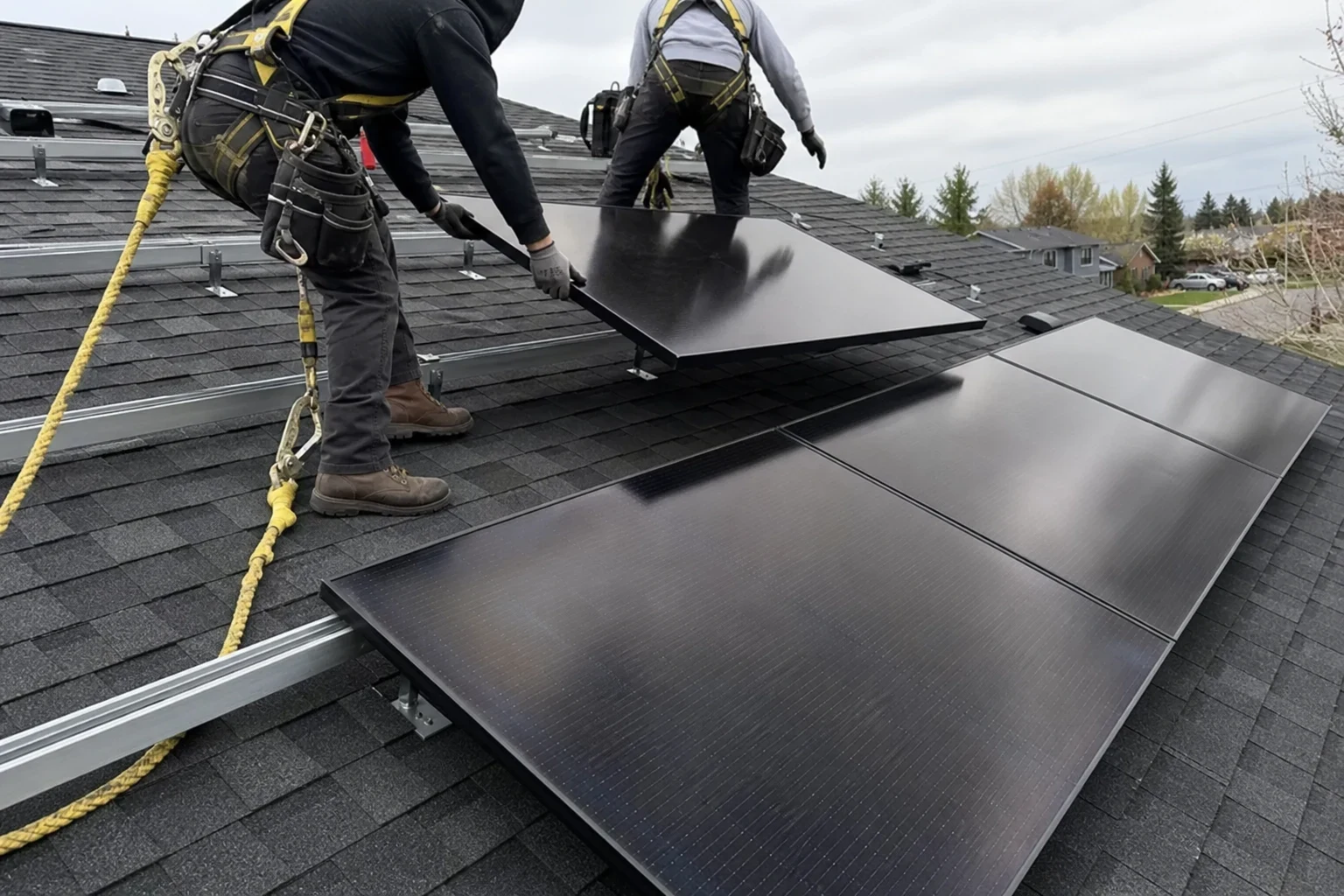
Loose clamps, missing grounding hardware and shifted rails are tightened or replaced so modules stay secure through snow load and wind.
Monitoring that has gone dark
Older monitoring gateways often lose their connection after a router change or a cellular network shutdown. We restore reporting so you can see production again.
When your solar system needs a closer look
Output down from a year ago
Line up this month's production against the same month in an earlier year. If the gap is bigger than normal panel aging explains, a failed string, bypass diode or inverter channel is the usual suspect.
Fault codes or a red status light
Ground-fault and isolation errors usually trace back to moisture or damaged insulation in the DC wiring. Clearing the code without finding the cause just lets it come back.
Discoloration or burn marks
Brown cells, a bubbled backsheet or scorching around a junction box all mean heat is building where it should not.
Monitoring reads zero
Sometimes only the data link has dropped. Other times the array has truly stopped producing, and testing tells you which one you have.
Work done by an earlier company
Panels added or an inverter swapped by another installer years back can leave mismatched parts that cause slow losses you will not see from the ground.
What happens from your first call to the final test
- 1
Describe the problem by phone
Let us know what your inverter or monitoring is reporting. Often we set up a free virtual appointment first, so we can look at your production data, the inverter display and any photos you have before a truck rolls.
- 2
Testing at your home
We measure each string, run a thermal camera across the modules and open up the inverter and disconnects. Everything we find gets photographed, including any earlier repair that was done wrong.
- 3
Line-item estimate
The written estimate keeps the fault you called about separate from any other issues we spotted. You choose which items go ahead.
- 4
Fix and confirm under load
If the work needs a permit, we pull it. After the repair we retest the circuit under load and check that production shows up on your monitoring before we pack up.
What moves the cost of a repair
No two repairs price the same, because the cost follows the cause. A loose connector and a failed central inverter are very different jobs. We quote after diagnosis so the number reflects your system, not a guess.
- What actually failed
- Replacing a pair of connectors is a short job. An inverter replacement involves the unit itself, wiring changes and sometimes a permit.
- Part availability
- Older panel and inverter models are often discontinued. Sourcing a compatible substitute, or adjusting the string design to fit one, adds time.
- Condition of older wiring
- If the home's service panel, breaker or grounding does not meet current code, that may need correcting for the repair to pass inspection.
- Access to the array
- Height, layout and how hard it is to reach the faulty module or junction box affect labor. Midvale winters can also push some work to a dry day.
Common questions about fixing a solar system
Something not covered here? (801) 761-4045
Can you fix an array that a different installer put in?
We can. Plenty of the systems we test came from installers who have since closed or stopped answering. We diagnose them with the same string tests and thermal scans, and we flag any earlier work that paired parts that were never meant to go together.
Is it worth repairing an older system, or should I replace it?
That comes down to module age, how many components are failing and whether matching parts can still be found. When the trouble is one inverter or a handful of connectors, a repair is usually the sensible choice. When several parts are wearing out together, we put both paths side by side so you can weigh them.
My panel model is discontinued. Can one module still be replaced?
In many cases, yes. We pick a replacement whose voltage and current ratings line up with the rest of the string, so it does not pull down the output of its neighbors. If nothing comes close enough, we explain the tradeoffs before any work begins.
How do I know if my system is underperforming?
Pull up your monitoring or the lifetime total on the inverter and look at matching months from different years. Modules give up a small slice of output every year, so what matters is a sudden or steep fall. We are glad to go over the numbers with you in a free virtual appointment.
Should I shut the system off if I see a fault?
If you notice scorch marks, smell something hot or the inverter reports an arc fault, turn off the AC and DC disconnects following the instructions on the inverter label, and keep away from the wiring. Then phone us and we will book a visit.
Find out what is behind the drop
Tell us what your inverter or monitoring is showing. We will talk it through, set up a look at the system and give you a clear answer on repair or replacement.